When a heating or plumbing emergency strikes, safety and swift, sensible action make all the difference. The following practical checklist is designed for busy homeowners and commercial property managers in Brentwood and across Essex. Use it to minimise damage, keep people safe, and help our engineers resolve the issue quickly once on site.
General safety first
- If water is near electrics, isolate the affected circuit or switch off power at the consumer unit. Do not touch wet electrical equipment.
- Know your main water stopcock location (often under the kitchen sink, in a utility cupboard, or under the stairs) and turn it clockwise to shut off. In flats, you may have a local isolation valve and a building supply—use your local isolation first if possible.
- If you smell gas or your carbon monoxide alarm sounds, ventilate by opening doors and windows, evacuate the property, and call the National Gas Emergency Service on 0800 111 999 immediately. Do not operate electrical switches. Only call an engineer once the emergency service has confirmed it is safe.
- Document the situation with photos or video for insurance purposes.
Burst or leaking pipe
- Shut off the main stopcock. If the leak is local to an appliance (toilet, tap, washing machine), close the isolation valve on the feed if accessible.
- Turn off your boiler and central heating to stop the system refilling or circulating.
- Open cold taps to drain residual water from the pipework. Only open hot taps when the system is cool, and never if you suspect a pressurised hot water cylinder issue.
- Move furniture, soft furnishings, and valuables out of harm’s way. Use buckets and towels to contain water. If a ceiling is bulging, do not stand underneath it—keep clear and await professional help.
- If safe and accessible, apply a temporary measure such as a pipe repair clamp or self-amalgamating tape to stem minor weeping. Do not use naked flames or attempt soldering.
- For suspected frozen pipes, turn off the water at the stopcock, open the affected tap, and gently warm the pipe with warm towels or a hairdryer on a low setting. Never use a blowtorch or heat gun.
Boiler failure or no heating/hot water
- Check power and controls: ensure the boiler is on, the room thermostat is calling for heat, timers are set correctly, and any fused spur switch is on. Prepayment meters should have sufficient credit.
- Note error codes/messages displayed on the boiler screen—these help diagnosis.
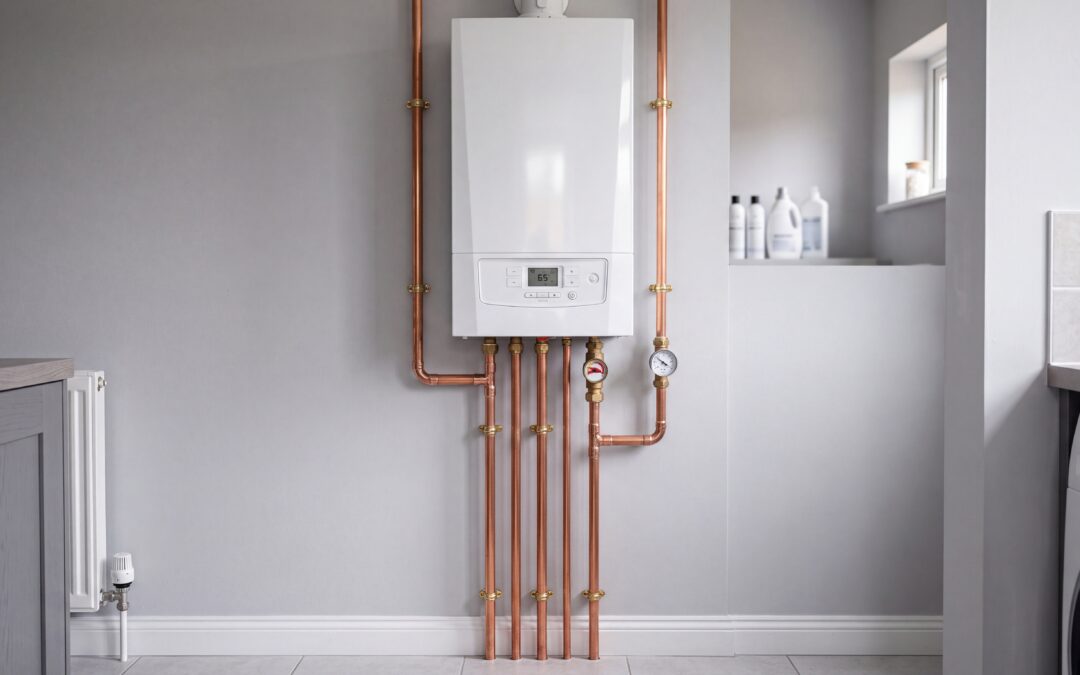
- Check system pressure (sealed systems): most boilers operate around 1.0–1.5 bar when cold. If the pressure is low, consult your boiler manual and, only when the system is cool, carefully top up via the filling loop to the recommended level. Do not over-pressurise.
- Condensate pipe in freezing weather: if your boiler is showing a condensate blockage fault, thaw the external section by pouring warm (not boiling) water over the pipe or applying a warm compress. Then attempt a reset per the manufacturer’s instructions.
- Bleeding radiators: if some radiators are cold at the top, bleeding can help. Switch the heating off and allow radiators to cool. Use a radiator key and a cloth to release air gently until water appears, then close. Recheck boiler pressure afterwards and top up if necessary. Do not attempt this on very hot radiators.
- If you smell gas or suspect carbon monoxide, follow the General safety first steps above and do not attempt to restart the boiler.
- Do not remove your boiler’s case or interfere with flues or internal components—by law, gas work must be carried out by a Gas Safe registered engineer.
Blocked toilet
- Stop the overflow: turn off the water feed via the isolation valve (usually on the wall or under the cistern). If needed, lift the cistern lid and push the flapper/flush valve down to stop water entering the bowl.
- Do not keep flushing; this risks flooding.
- Protect the floor with towels or a waterproof sheet and keep nearby taps off to avoid adding water to the system if other drains are affected.
- Use a plunger with a flange designed for toilets. Ensure a good seal and plunge steadily (not violently) to avoid splashing.
- Add hot (not boiling) water and a small amount of washing-up liquid to the bowl, wait 10–15 minutes, then plunge again.
- If available, a toilet auger can clear local obstructions; feed it gently to avoid scratching the porcelain.
- If multiple fixtures are backing up (toilets, showers, sinks), the issue may be in the main soil stack or external drain. Avoid using water in the property and seek urgent assistance.
- Avoid chemical drain cleaners—they can be hazardous and may damage pipework.
Leaking radiator or valve
- Turn off the heating system.
- Close the radiator’s valves (the thermostatic valve at one end and the lockshield at the other) to isolate the radiator.
- Place a tray or towels beneath the leak and avoid adjusting fittings further to prevent worsening the leak.
- If air is hissing from the bleed valve, tighten it gently with a radiator key; do not overtighten.
Overflowing cold-water tank or cistern
- Turn off the main stopcock or the relevant isolation valve.
- Switch off any immersion heater at its fused spur.
- Contain overflow with buckets or towels and keep clear of any ceiling below if water ingress is evident.
No water supply
- Check whether neighbours are affected; if so, it could be a water supplier issue.
- Ensure your stopcock is fully open.
- In very cold weather, suspect a frozen supply—gently warm exposed pipework as noted above.
What to prepare for the engineer
- Share exactly what happened and when, any error codes, and steps you have already taken.
- Provide clear access to the boiler, airing cupboard, stopcock, and any affected areas.
- Know where your consumer unit and gas meter are located.
- Arrange safe site access for our team (parking, security, and any site inductions for commercial premises).
- Keep pets and children away from work areas.
If at any stage you feel unsure or conditions are unsafe, stop and wait for professional assistance. Your safety comes first.
Why Brentwood Heating Ltd is your 24/7 safety net in Brentwood and across Essex
Emergencies do not keep office hours, which is why Brentwood Heating Ltd provides round-the-clock call-outs, 365 days a year. Locally owned and operated by Lewis Trembling, our team serves homeowners and commercial property managers throughout Brentwood and the wider Essex region—including Upminster, Hornchurch, Southend, and surrounding areas—with fast response and clear communication from first call to sign-off.
What you can expect
- Expert, certified engineers: Every engineer is Gas Safe registered and experienced across leading boiler makes, including Worcester-Bosch, Vaillant, Ideal, and Baxi. We diagnose accurately, make safe swiftly, and complete repairs to manufacturer standards.
- Transparent, straightforward process: From your first call, we explain likely causes, immediate safety steps, and any site preparations to help minimise damage. On arrival, we isolate the fault, complete a safe temporary or permanent repair where possible, and outline any follow-up works required.
- Support for both domestic and commercial sites: Whether it is a family home, HMO, retail unit, or managed office block, we work efficiently to minimise disruption, coordinate with property managers, and meet compliance obligations.
- Tailored solutions and fair pricing: While we do not publish a fixed price list online, we provide clear, tailored quotations before work proceeds. We balance affordability with robust workmanship and can specify options to suit different systems and budgets, including boilers with attractive manufacturer-backed guarantees (up to 10 years on select models).
- Full-service capability: Beyond emergency response, we deliver ongoing boiler servicing, central heating installation and repairs, power flushing, gas safety certification, bathroom design and installation, and blocked toilet solutions—so you have one trusted partner for all plumbing and heating needs.
When to call us immediately
- Water is uncontrolled, near electrics, or causing ceiling deformation.
- There is a total loss of heating or hot water in vulnerable environments (young children, elderly occupants, healthcare or hospitality premises).
- Multiple fixtures are backing up or there is evidence of a main drain blockage.
- Boiler fault codes persist after basic checks, or you suspect a condensate freeze you cannot safely clear.
- Any sign of gas smell or carbon monoxide alarm activation—after contacting the National Gas Emergency Service, call us to inspect and repair the system as required.
Helpful prevention checklist
- Book annual boiler servicing to maintain efficiency, validate warranties, and catch issues early.
- Lag exposed pipework (especially loft spaces and external condensate pipes) and keep internal spaces above freezing in cold snaps.
- Locate and test your stopcock and appliance isolation valves periodically to ensure they operate smoothly.
- Fit and test carbon monoxide alarms near sleeping areas and in rooms with fuel-burning appliances.
- Avoid disposing of wipes, sanitary products, or fats/oils down toilets and sinks—they are a leading cause of blockages.
- For older or sludge-prone systems, consider power flushing and magnetic filtration to protect new components.
- Landlords and managing agents: schedule timely Gas Safety (CP12) checks to remain compliant and safe.
In any emergency, one call to Brentwood Heating Ltd connects you to a calm, qualified professional who will guide you through immediate safety steps and dispatch help—day or night. Our combination of rapid response, reliable workmanship, and respectful, tidy practices is why households and businesses across Brentwood and Essex trust us to keep their properties safe, warm, and running smoothly.