Heat pumps are increasingly seen as a practical, efficient alternative to traditional boilers and standalone air-conditioning systems. At their core, modern air-source and ground-source heat pumps transfer heat rather than generate it. In winter, they extract low-grade heat from the air or ground and raise it to usable temperatures for space heating and hot water. In summer, many models can reverse the cycle to provide cooling—offering a single, integrated system for year-round comfort.
For homeowners and property managers across Essex—from Brentwood and Upminster to Hornchurch and Southend—this dual capability is compelling. The region’s mixed climate, with milder winters and increasingly frequent summer heatwaves, suits heat pumps well. Key advantages include:
- One system for heating and cooling: Air-to-air heat pumps (often called “mini-splits”) both heat and cool living spaces. Air-to-water heat pumps primarily serve central heating and hot water; some can deliver cooling via suitable emitters (such as fan-coil units) where designed for it.
- High efficiency and comfort: A well-designed system typically provides 2.5–4 units of heat for every unit of electricity consumed (seasonal performance varies by property and design). Lower, steadier flow temperatures enhance comfort and reduce temperature swings.
- Potential long-term savings: While individual results depend on energy tariffs, building fabric, and system design, many households see reduced energy bills compared with electric resistance, oil or LPG heating. With appropriate tariffs and a low-temperature design, heat pumps can be competitive with mains gas as well.
- Lower carbon footprint: Because they are highly efficient and increasingly powered by a greener electricity grid, heat pumps can reduce operational emissions—an important consideration for organisations with ESG targets and for homeowners seeking future-ready upgrades.
- Reduced maintenance and no on-site combustion: There is no flue, no combustion, and no need for gas safety checks for the heat pump itself, simplifying compliance in many scenarios.
Initial costs versus long-term benefits must be weighed carefully. Air-source heat pump installations typically cost more upfront than replacing a gas boiler, particularly where properties require radiator upgrades, new cylinders, or electrical works. However, several factors offset this:
- Government incentives: The Boiler Upgrade Scheme (BUS) currently offers grants in England and Wales for eligible installations (e.g., up to £7,500 for many air-source systems, subject to change and eligibility). Installers must be MCS certified to access these funds on your behalf. Always check the latest Ofgem guidance before proceeding.
- Running cost reductions: When paired with a careful heat-loss-led design and favourable electricity tariffs, many occupiers find total cost of ownership improves over the system’s life.
- Longevity and warranties: Quality equipment often carries robust warranties, and correct design can prolong component life by avoiding high flow temperatures and frequent cycling.
- Asset value and compliance: For landlords and commercial managers, efficient systems can support energy compliance targets and may enhance the asset’s appeal to tenants.
In short, heat pumps offer a credible, efficient route to reliable heating and cooling, provided they are specified and installed with due diligence.
What Essex property owners should consider before installing
Heat pump success is largely about design detail. The following considerations will help you determine suitability, select the right solution, and plan an installation that minimises disruption.
-
Start with a whole-home heat loss assessment
- A room-by-room heat loss survey is essential. It informs the correct heat pump size, emitter selection, and expected seasonal efficiencies (SCOP).
- Insulation upgrades, draught-proofing, and glazing improvements can reduce load and allow lower flow temperatures (35–45°C), improving efficiency and comfort.
-
Choose the right system type
- Air-to-air (ductless or ducted):
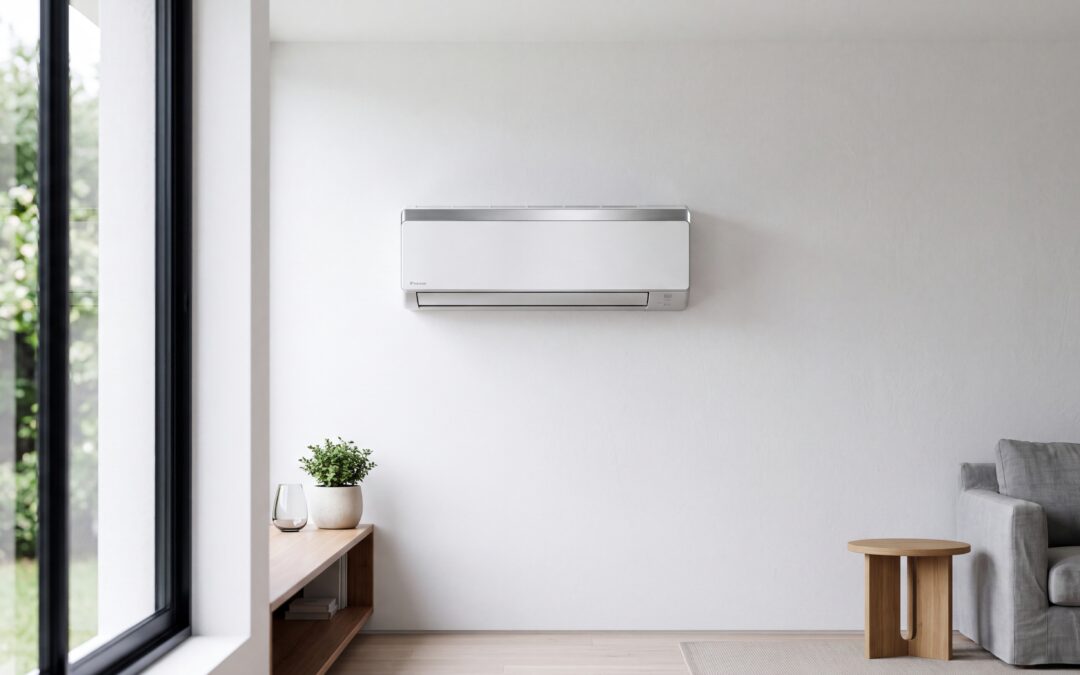
- Ductless “mini-split” systems are popular where homes lack existing ductwork. They deliver efficient heating in winter and cooling in summer, with indoor wall, floor, or ceiling cassettes serving individual zones.
- Ducted variants conceal indoor units in ceiling voids or lofts for a discrete finish, distributing air via short duct runs. They require more space and careful acoustic design.
- Best for: properties prioritising active cooling and zonal control, or where hot-water integration is not essential.
- Air-to-water:
- Connects to radiators or underfloor heating, providing space heating and domestic hot water via a cylinder.
- “Cooling capable” designs can provide summer cooling when paired with suitable emitters (fan-coil units or chilled-water-compatible underfloor systems). Standard panel radiators are not suitable for cooling due to condensation risks.
- Best for: homeowners replacing a boiler-based central heating system and seeking hot water integration, with optional cooling in selected rooms.
-
Consider property-specific constraints in Essex
- Outdoor unit placement and planning: Many single air-source units fall under Permitted Development in England, provided noise and siting criteria are met. However, flats, listed buildings, and conservation areas may require planning permission. Check local authority guidance and acoustic limits early.
- Electrical capacity: Your Distribution Network Operator in Essex (UK Power Networks) may need to approve the connection and, if necessary, upgrade the main fuse. Allow time for this process.
- Space for equipment: Air-to-water systems need space for a cylinder and, in many cases, a buffer or volumiser. Ducted air-to-air systems need suitable voids for duct runs. Early space planning avoids compromises later.
-
Ducted versus ductless: making the right call
- Ductless (multi-split) advantages:
- Minimal structural work; fast installation.
- Independent room control for occupied spaces.
- Ideal for retrofits and apartments (subject to landlord and planning consents).
- Ducted advantages:
- Discreet aesthetics with near-invisible terminals.
- More uniform air distribution, which can be beneficial for open-plan areas or larger homes.
- Decision drivers:
- Ceiling void availability, architectural constraints, acoustic targets, and maintenance access.
- For mixed-use or larger properties, a combination approach (e.g., ducted for main zones, ductless for bedrooms or annexes) can be effective.
-
Plan proactively—do not wait for a breakdown
- Lead times: Quality installations are design-led and often scheduled weeks in advance, especially in peak seasons. A typical domestic install takes 2–5 days depending on complexity.
- Surveys and permissions: Allow time for heat loss calculations, DNO approval, and any planning checks.
- Shoulder-season installations (spring or early autumn) minimise disruption and reduce the need for temporary heating or cooling.
-
Controls, zoning, and comfort
- Prioritise integrated controls that manage weather compensation, flow temperatures, and schedules.
- Zonal control improves comfort and energy use—especially important in larger homes and multi-tenant buildings.
- Cooling mode considerations: Ensure condensate drainage and humidity control are included in the design where active cooling is specified.
-
Radiators, emitters, and hot water
- Oversizing radiators or using fan-coils enables lower flow temperatures, boosting efficiency.
- Underfloor heating pairs well with heat pumps due to large emitter surface area.
- Domestic hot water: A correctly sized cylinder with a high-surface-area coil is recommended; set pasteurisation cycles as required by the manufacturer.
-
Installer selection: how to choose with confidence
- Accreditation and compliance:
- MCS certification is essential for accessing Boiler Upgrade Scheme grants and signals adherence to recognised standards.
- F-Gas/REFCOM registration for handling refrigerants (especially relevant for air-to-air or VRF systems).
- Electrical accreditation (e.g., NICEIC or NAPIT) for associated wiring works.
- Gas Safe registration where hybrid systems or legacy gas appliances are present.
- Evidence-based design:
- Request a written room-by-room heat loss report, proposed flow temperatures, SCOP estimates, and a commissioning plan.
- Ask for predicted running costs under realistic tariffs, and the assumptions behind them.
- Product and warranty clarity:
- Confirm refrigerant type, noise ratings, warranty length on compressors and electronics, and availability of local parts support.
- Check that manufacturer warranties remain valid when installed and serviced by the proposed contractor.
- References and aftercare:
- Seek recent local case studies, ideally in properties similar to yours.
- Clarify service plans, response times, and remote monitoring options for proactive maintenance.
-
Budgeting: balancing upfront and lifetime costs
- Indicative costs for air-source systems vary widely with property size and scope of works. While upfront investment can exceed a like-for-like boiler swap, grant support and lower running costs help close the gap.
- For homes currently on oil, LPG, or electric resistance, the running-cost benefits are often most pronounced.
- Consider whole-life cost, including energy, maintenance, and expected equipment life, not just capital expenditure.
-
Commercial and multi-occupancy considerations
- For offices, HMOs, and retail spaces, variable refrigerant flow (VRF/VRV) systems offer efficient zoned cooling and heating with centralised control, though they require specialist design and commissioning.
- Ensure clear metering and control strategies to allocate costs fairly across tenants and maintain thermal comfort in varied occupancy patterns.
-
Environmental and regulatory trajectory
- Heat pumps align with the decarbonisation of the UK grid and can future-proof properties against evolving regulations and carbon pricing.
- Low-GWP refrigerants (such as R32 and R290 in certain models) and improved acoustics are making newer systems even more attractive for residential settings.
Finally, be wary of one-size-fits-all proposals. The best outcomes come from rigorous surveys, transparent designs, and installers who explain choices in plain terms. By assessing property fabric, selecting the appropriate system (air-to-air or air-to-water; ducted or ductless), planning permissions, electrical capacity, and aftercare, Essex homeowners and property managers can secure a reliable, efficient solution that provides comfortable cooling in summer and dependable heating in winter—backed by clear running-cost expectations and the support of qualified local specialists.