For many Essex homeowners and property managers, the question is not simply whether a boiler has failed, but whether it makes better financial and operational sense to repair it or replace it. In busy households, offices, HMOs and retail premises, heating and hot water are essential services. Any prolonged disruption can quickly become inconvenient, costly and, in some cases, a compliance concern. A clear decision-making framework can therefore help avoid unnecessary expense while ensuring that the chosen solution is reliable, efficient and appropriate for the property.
A useful starting point is to assess the boiler’s current symptoms, age, efficiency and the wider risk posed by continued operation. Some faults are straightforward and economical to resolve. Examples include pressure loss caused by minor leaks, thermostat or control issues, ignition faults, pump problems, frozen condensate pipes, or individual components such as motorised valves and expansion vessels nearing the end of their service life. In many cases, a professional boiler repair by a qualified engineer can return the system to normal performance without the disruption and cost associated with a full replacement.
However, there are several signs that indicate replacement may be the more sensible long-term option. Repeated breakdowns over a short period are often the clearest warning sign. A boiler that requires frequent call-outs, especially during colder months, can become a liability for both households and commercial sites. Unusual noises such as kettling, banging or whistling may point to internal wear, limescale or sludge build-up. Inconsistent heating, patchy hot water, rising energy bills and error codes that continue to return after repair can all suggest that the appliance is no longer operating efficiently or reliably.
Age is another major factor. As a general guide, boilers over 10 to 15 years old often merit closer review, particularly if they are non-condensing or older condensing models with lower efficiency standards than modern alternatives. Even if an older boiler can technically be repaired, the total cost of ownership may no longer justify preserving it. A newer A-rated boiler can deliver meaningful savings in fuel consumption, especially in larger homes or commercial buildings with sustained heating demand. For landlords, HMO managers and commercial property operators, improved efficiency can also contribute to better cost forecasting and fewer complaints from occupants or tenants.
Parts availability should not be overlooked. A repair may appear attractive initially, but if a boiler is an older model with discontinued or difficult-to-source parts, the downtime risk increases considerably. This is particularly important in workplaces, shops and shared residential buildings where loss of heating and hot water can disrupt operations, create dissatisfaction and increase management pressures. If obtaining a key component is likely to take days or longer, replacing the unit with a current model supported by strong manufacturer backing may offer a faster and more dependable outcome.
Downtime risk is often the deciding factor for commercial clients and property managers. In a single-family home, a short interruption is disruptive enough. In an office, HMO, retail premises or multi-occupancy building, it can escalate quickly. Tenants may raise urgent complaints, trading hours can be affected, and vulnerable occupants may require immediate support. In such settings, the right decision is not always the one with the lowest upfront cost. It is often the one that minimises repeat failure risk and restores dependable service quickly. This is where working with a responsive local company such as Brentwood Heating Ltd can make a substantial difference. With 24/7 emergency call-out support across Brentwood, Upminster, Hornchurch and Southend, fast attendance helps reduce uncertainty and limit the operational impact of heating or plumbing failures.
When considering replacement, brand and model selection should align with the property’s size, usage pattern and budget. Worcester-Bosch remains a popular choice for clients seeking premium build quality, strong reliability and excellent warranty support on selected models. Vaillant is widely respected for performance, engineering quality and efficiency, making it a sound option for households and commercial environments where long-term dependability is a priority. Ideal often appeals to clients looking for an effective balance between affordability and performance, while Baxi provides practical and flexible solutions for a wide range of property types and budgets. The right option will depend not only on brand preference but also on heat demand, flow rate requirements, available space, compatibility with the existing system and future maintenance considerations. For this reason, a tailored quotation and site-specific recommendation are far more valuable than a one-size-fits-all answer.
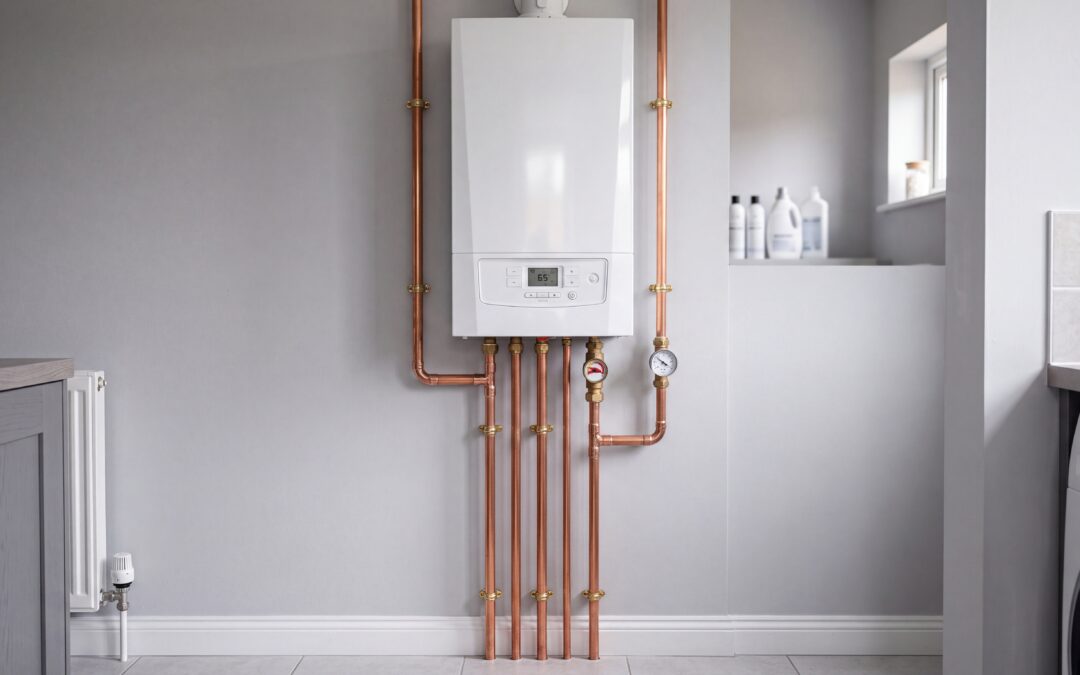
It is also important to understand what a proper Gas Safe boiler installation and commissioning should include. First, the installation must be carried out by a Gas Safe registered engineer, ensuring that all gas work complies with current safety regulations. The old boiler should be removed responsibly, and the system pipework, flue arrangement, condensate discharge and controls should all be assessed for suitability. A new boiler should be correctly sized for the property, rather than simply matched to the outgoing unit without review. Safe and compliant installation should also include system cleaning where required, proper connection and testing, flue integrity checks, gas tightness testing, ventilation considerations where relevant, and full commissioning in line with the manufacturer’s instructions. The engineer should then register the installation, complete the Benchmark paperwork, explain the controls clearly to the customer, and confirm the warranty arrangements. These steps are not administrative extras; they are essential to safety, performance and long-term product protection.
Warranty length is another area where replacement can offer strong value. Selected boilers may come with guarantees of up to 10 years, subject to model choice, correct installation and ongoing servicing requirements. For homeowners, this can provide valuable reassurance against future repair costs. For landlords and commercial managers, it supports budgeting and reduces exposure to unplanned expenditure. A strong manufacturer-backed warranty, paired with annual servicing, can significantly improve confidence in the heating system over the medium to long term.
That said, replacement is not the answer in every case. There are circumstances where the performance of an existing heating system can be restored without changing the boiler itself. One of the most overlooked solutions is power flushing. If radiators have cold spots, heat-up times are poor, the boiler is noisy, or the water in the system is discoloured, sludge and debris may be restricting circulation. A professional power flush can remove this build-up, helping radiators heat more evenly, reducing strain on the boiler and pump, and improving overall efficiency. Where the boiler is otherwise serviceable and structurally sound, this can be a highly cost-effective intervention. It is especially relevant where a boiler appears underperforming, but the root issue lies within the wider central heating system rather than the appliance alone.
A practical decision framework can therefore be summarised as follows: repair is often suitable when the boiler is relatively modern, the fault is isolated, parts are readily available, and the appliance has otherwise been reliable and efficient. Replacement is often the better choice when the boiler is older, breakdowns are recurring, parts are obsolete or expensive, efficiency is poor, or the cost of repair approaches a significant proportion of the cost of a new installation. For commercial properties and managed residential buildings, the cost of downtime should always be included in the calculation. A boiler that repeatedly fails at critical moments may be more expensive overall than a new unit with a long warranty and lower running costs.
Prevention also deserves attention, particularly before winter. A simple readiness checklist can reduce the chance of emergency breakdowns during peak demand periods. Property owners and managers should arrange an annual boiler service, confirm the pressure is within the recommended range, test thermostats and heating controls, bleed radiators if needed, check for unusual noises or leaks, inspect exposed condensate pipework, ensure gas safety certification is current where required, and address any signs of slow warm-up or uneven heating before temperatures drop. For landlords, letting agents and HMO operators, early action is especially important as winter failures can create avoidable tenant dissatisfaction and urgent maintenance pressures.
In all cases, the value of a trusted local specialist lies not only in technical ability but in how the work is managed from first contact to completion. Brentwood Heating Ltd has built its reputation on fast response, clear communication and dependable workmanship for both domestic and commercial clients. Whether the requirement is an emergency repair, a planned boiler replacement, a system power flush, a gas safety certificate or broader plumbing and heating support, customers benefit from a straightforward process, transparent quotations and respectful, tidy working practices. For busy homeowners and property managers across Brentwood, Upminster, Hornchurch and Southend, that combination helps minimise disruption and supports confident decision-making.
Ultimately, the repair-or-replace decision should never be based on guesswork alone. It should be informed by the boiler’s age, fault history, efficiency, parts availability, the consequences of downtime and the total cost of ownership over time. With expert assessment and honest guidance, it becomes much easier to choose the option that delivers the best balance of reliability, safety and value. In many situations, a timely repair will restore full performance. In others, a modern replacement backed by professional Gas Safe installation and a long warranty will be the smarter investment. The key is to act early, assess the full picture and work with an experienced local company that understands the urgency, expectations and practical needs of Essex property owners.