Community sports clubs are custodians of local wellbeing. They nurture participation, provide safe, welcoming spaces, and often operate on tight budgets stewarded by volunteers or small facility teams. In this context, energy-efficient upgrades are not a luxury; they are a strategic necessity. By improving insulation, ventilation, and heating performance, clubs can reduce energy bills, lower carbon emissions, and reinvest savings into coaching, equipment, and community programmes.
Heating typically accounts for a significant share of a clubhouse’s energy use—especially where changing rooms, showers, and function areas must be kept warm and comfortable. Older boilers, poorly balanced systems, and inadequate controls lead to wasted energy and uneven temperatures. Likewise, insufficient insulation and uncontrolled ventilation result in heat loss and damp, compromising comfort and increasing maintenance costs.
The benefits of modernising are tangible:
- Cost control and resilience: Upgrading an old non-condensing boiler to a modern A-rated condensing model, combined with effective controls and system optimisation, can deliver meaningful reductions in gas consumption. For clubs, this translates into budget predictability and resilience against price volatility.
- Comfort and participation: Even, reliable heat and good air quality make facilities more welcoming for players, spectators, and community users—encouraging greater utilisation and hire revenue.
- Duty of care and compliance: Gas Safe-compliant installations and regular servicing reduce safety risks and downtime. Proper ventilation and moisture control also protect the building fabric and reduce mould and condensation.
- Environmental leadership: Demonstrable carbon reductions strengthen funding bids, attract sponsors with sustainability goals, and set a positive example for members—especially young people.
- A replicable blueprint: Well-planned, measured upgrades create a practical template other clubs can follow, amplifying community impact.
Crucially, finance need not be a barrier. Many clubs secure support through local authority schemes, regional sports funds, or national programmes such as Sport England and the Football Foundation. Combining external funding with expert advice enables phased improvements that fit the club’s calendar and cash flow, while building towards long-term, measurable savings.
A practical roadmap for clubs in Essex (and how specialist support helps)
1) Begin with an evidence-based assessment
- Energy review and site survey: Establish current energy use, hours of occupation, and comfort issues. A structured walk-through will identify obvious heat losses, stagnant zones, and outdated equipment.
- System health check: Many heating systems underperform because of sludge build-up, stuck valves, or incorrect pump settings. A technical inspection will reveal where low-cost interventions can unlock immediate gains.
- Compliance check: Confirm the status of gas safety certification for boilers and appliances, especially in mixed-use community facilities where both domestic-style and commercial appliances may be present.
2) Prioritise high-impact measures
- Insulation and draught control: Roof and loft insulation, insulated pipework, well-fitted doors, and simple draught-proofing reduce heat loss dramatically. For hot water cylinders, jackets and lagging are quick wins.
- Ventilation with purpose: In changing rooms and shower areas, mechanical ventilation is essential for air quality and moisture control. Where appropriate, heat-recovery ventilation can limit heat loss while improving freshness. Even without full system replacement, ensuring fans are properly specified, maintained, and controlled prevents condensation and protects finishes.
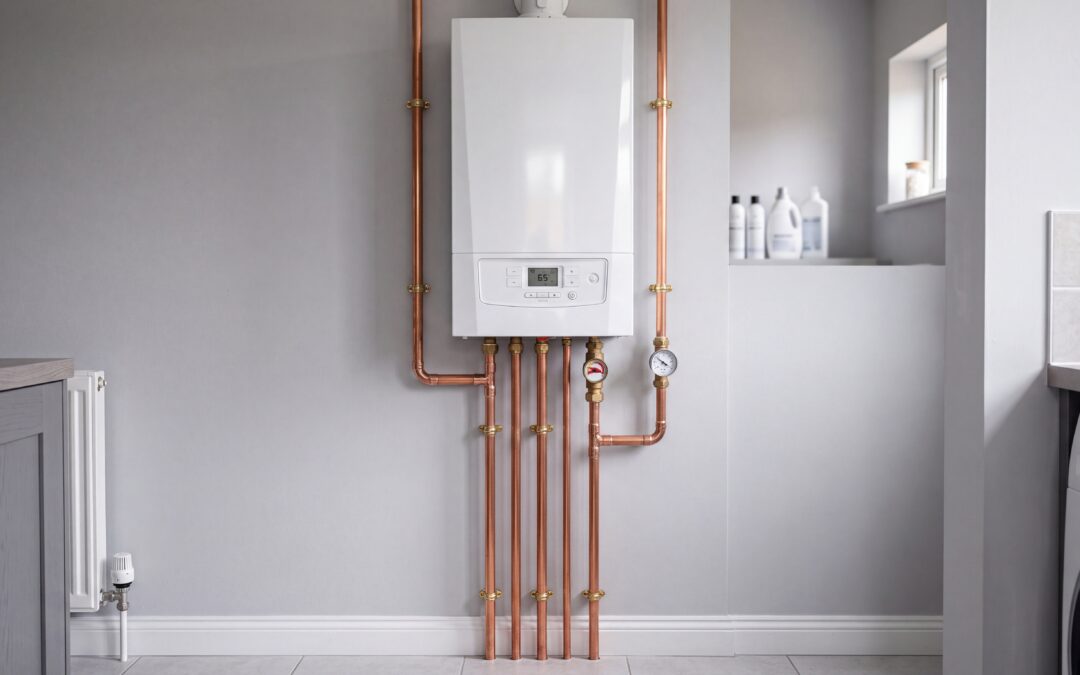
- High-efficiency boilers and controls: Replacing an ageing boiler with a high-efficiency condensing unit from a leading manufacturer such as Worcester-Bosch, Vaillant, Ideal, or Baxi is often the single biggest saver. Pair it with:
- Weather and load compensation to match heat output to demand.
- Time and temperature zoning (e.g., separate schedules for changing rooms, bars, and halls).
- Thermostatic radiator valves for room-level control.
- Smart scheduling to align heating with training slots and function bookings.
- System cleaning and balancing: Power flushing removes sludge that impedes heat transfer and causes cold spots, while professional balancing ensures every radiator receives the right flow. Together, these measures improve comfort and reduce boiler cycling, enhancing efficiency.
- Domestic hot water optimisation: In facilities with showers, efficient water heating and well-insulated distribution reduce energy use and waiting times. Anti-scald and mixing valve configurations improve safety and user experience.
3) Align improvements with funding and procurement
- Build a phased plan: Start with urgent fixes and quick returns, then stage larger capital items to coincide with grant timelines and the off-season to minimise disruption.
- Gather evidence for funders: Baseline energy data, equipment specifications, projected savings, and carbon reduction estimates strengthen applications to bodies such as Sport England, the Football Foundation, local councils, and community energy schemes.
- Choose proven equipment with strong warranties: Manufacturer-backed guarantees of up to 10 years on selected boilers provide long-term assurance and lower whole-life costs.
4) Deliver with minimal disruption
- Protect training and fixture schedules: A disciplined project plan limits downtime. Many upgrades—controls, pipe insulation, and power flushing—can be scheduled around occupancy. Larger boiler replacements can be planned for off-peak periods.
- Maintain safety and compliance: Gas Safe registered engineers should carry out all gas work and issue the appropriate certifications on completion. Clear method statements and tidy working practices protect club users and volunteers.
5) Sustain the gains
- Annual servicing and periodic system checks: Routine maintenance maintains efficiency, validates warranties, and reduces the risk of breakdowns during key events.
- Ongoing optimisation: Simple measures—refining schedules each season, adjusting setpoints, reviewing ventilation run-times—keep savings on track as usage patterns evolve.
- Track results: Comparing energy bills and meter readings before and after the upgrades demonstrates impact to members, funders, and sponsors, creating momentum for further improvements.
How a local specialist can help
- End-to-end support: From initial consultation and tailored quotation through to installation, commissioning, and aftercare, an experienced heating partner streamlines the process and ensures the right specification for your building and budget.
- Commercial and domestic expertise: Community facilities often blend bar areas, kitchens, offices, and sports spaces, each with different heating profiles. A provider with both domestic and commercial capability can design a coherent, zoned system that works for all users.
- Rapid response when it matters: Reliable 24/7 call-out support protects your calendar of fixtures and events, providing peace of mind during the season.
- Transparent communication: A clear, step-by-step customer journey—covering options, timelines, and warranties—helps committees make confident, accountable decisions.
- Local knowledge: A team familiar with venues across Brentwood and the wider Essex area—including Upminster, Hornchurch, and Southend—can draw on relevant experience to anticipate practical constraints and suggest proven solutions.
Brentwood Heating Ltd supports community sports clubs across Essex with boiler servicing, repair and replacement, central heating installation and optimisation, power flushing, gas safety certification, general plumbing, emergency call-outs, and complete bathroom installations for changing facilities. All engineers are Gas Safe registered, and we work with leading boiler manufacturers to match the right system to your usage and budget. Whether you need an urgent repair to keep a fixture on schedule or a phased upgrade plan with robust warranties, we provide dependable, tidy workmanship and a straightforward customer experience.
If you are exploring energy-efficient upgrades, we recommend starting with a site survey and tailored quote. This enables you to prioritise measures with the strongest return, align with potential funding windows, and schedule works around your club timetable. With smart planning and the right technical partner, your club can reduce running costs, improve comfort, and demonstrate environmental leadership—delivering benefits felt on and off the pitch for years to come.