Energy Performance Certificates (EPCs) grade a property’s energy efficiency from A (most efficient) to G (least efficient). For homeowners, a higher EPC can increase saleability and resale value; for landlords, it directly affects access to the private rented sector and tenant demand. Under the Minimum Energy Efficiency Standards (MEES) in England and Wales, most rented homes must currently achieve EPC band E or better to be legally let, and while government timelines have evolved, the policy direction remains clear: standards are not getting looser. Preparing now reduces compliance risk, lowers running costs, and strengthens the appeal of your property to increasingly energy‑conscious buyers and tenants.
An EPC is produced using a standardised assessment (SAP) that models the property’s fabric and systems, not just bills. The assessor records the construction type, insulation levels, heating and hot water systems, controls, glazing, lighting, and any renewables. Improvements that reduce heat loss or increase system efficiency will normally lift your score. Importantly, EPCs also include recommended measures—these are useful signposts for a cost‑effective upgrade path.
In practice, improving an EPC benefits you in four ways:
- Compliance and risk management: Avoid enforcement action, fines, and void periods due to non‑compliance. If you are a landlord, understand the MEES framework and any applicable cost‑cap or exemption routes; it is prudent to plan as if future tightening will require at least a band D or C.
- Operating cost reduction: Better insulation, modern boilers, and smart controls reduce energy waste, lowering bills for occupants—attractive to tenants and buyers.
- Marketability and asset value: Properties with higher EPCs tend to let faster, command stronger interest, and signal modern standards of maintenance.
- Comfort and resilience: Fewer draughts, steadier temperatures, and better system control improve living conditions and help manage damp and condensation risks.
Because EPCs weigh both the building fabric and its heating/hot‑water systems, the most reliable route to a higher rating is a balanced plan that addresses insulation, windows and doors, and the boiler and controls. The following step‑by‑step approach prioritises measures that typically offer the best return on investment while fitting around real‑world budgets and tenancy schedules.
A practical, step‑by‑step plan to lift your EPC rating
1) Establish your starting point
- Retrieve your last EPC and note the current rating, recommendations, and the “typical savings” for each measure.
- Compile evidence the assessor may not have seen: invoices, product datasheets, photos of loft insulation depth, cavity fill certificates, boiler model numbers, and control types. Accurate documentation can improve your next assessment without any new works.
2) Quick, low‑cost wins you can implement immediately
- Replace all remaining halogen and compact fluorescent bulbs with LEDs. LED lighting is a direct EPC tick and reduces electricity use by up to 80% versus halogen. Prioritise high‑use rooms and any downlighters.
- Draught‑proofing: Fit quality seals to letterboxes, loft hatches, and around external doors; seal obvious gaps around skirtings and pipe penetrations. Maintain required ventilation in kitchens, bathrooms, and rooms with flueless gas appliances.
- Hot‑water efficiency: Install an 80 mm+ insulated jacket on any vented hot‑water cylinder and lag the first 1–2 metres of hot and cold primary pipework. This is inexpensive and scores positively on EPCs.
- Heating system tune‑up: Bleed and balance radiators to ensure even heat distribution; consider a professional system cleanse and inhibitor dose. Cleaner, balanced systems allow lower flow temperatures, improving condensing boiler efficiency and comfort.
3) Strengthen your building fabric (the foundation of a better EPC)
- Loft/attic insulation: Top up to at least 270 mm mineral wool where accessible. If you already have 100–150 mm, adding another layer is cheap and effective. Do not block eaves ventilation, and raise storage boards so insulation is not compressed.
- Cavity wall insulation: If your property was built with unfilled cavities (common from the 1930s onward), a professional cavity fill can dramatically reduce heat loss. Ensure suitability via drill‑test and install with an accredited contractor.
- Floors: Where accessible (e.g., suspended timber floors), add underfloor insulation and seal perimeter draughts. Use breathable methods in period homes to avoid moisture problems.
- Solid walls: For solid masonry, internal or external wall insulation offers large gains but requires careful design and a larger budget. If not immediately feasible, ensure other measures are maximised first.
4) Upgrade windows and doors thoughtfully
- Double glazing: Replacing single glazing with modern, low‑emissivity double glazing (or even high‑performance secondary glazing in conservation settings) reduces heat loss and drafts and typically lifts EPC scores. Focus on frames with good seals and warm‑edge spacers.
- Targeted repairs: If whole‑house replacement is not viable, repair failed seals, add quality draught strips, and address trickle vents so you retain controlled ventilation.
5) Modernise your boiler and add smart, compliant controls
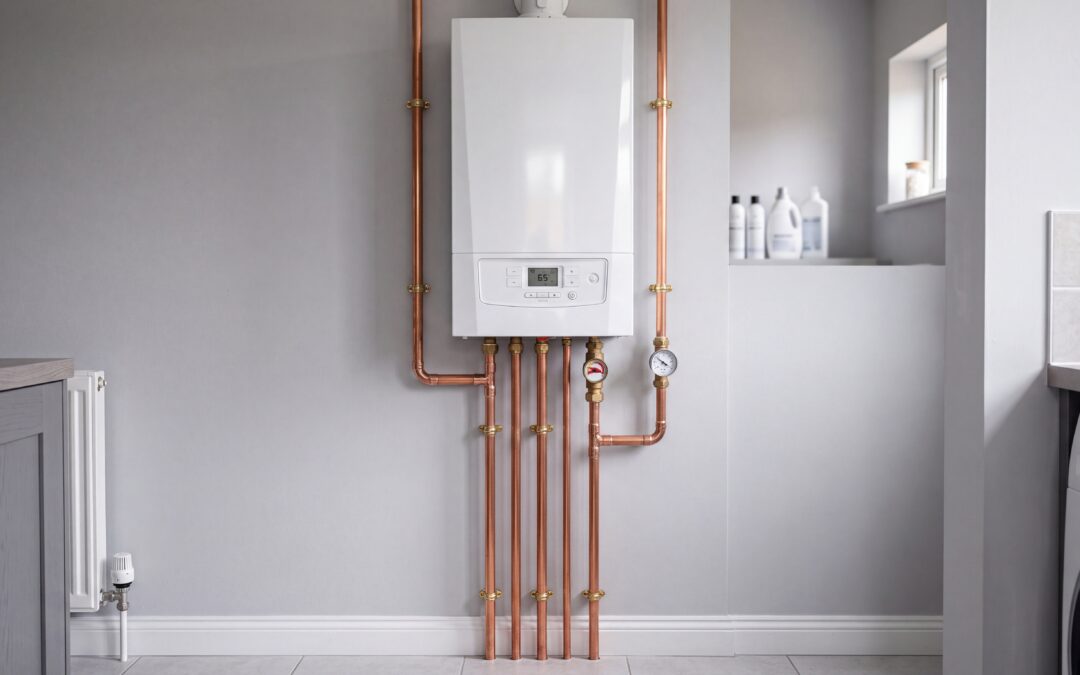
- High‑efficiency condensing boiler: If your boiler is over 10–12 years old, upgrading to a modern A‑rated condensing boiler can deliver a substantial EPC improvement and lower running costs. Correct sizing, proper commissioning, and a clean system are just as important as the boiler itself.
- Heating controls that EPCs reward:
- Room thermostat and programmer to set time and temperature schedules.
- Thermostatic radiator valves (TRVs) on most radiators for room‑by‑room control.
- Smart controls and zoning: Smart thermostats and smart TRVs enable precise scheduling, occupancy‑based setbacks, and weather compensation, helping the boiler run at lower flow temperatures where possible.
- Load/compensation controls: Advanced controls that modulate boiler output (e.g., weather or load compensation, OpenTherm with compatible boilers) improve seasonal efficiency and are recognised positively in assessments.
- System health:
- Power flushing or chemical cleaning ahead of a new boiler helps protect the appliance, improves heat transfer, and supports lower‑temperature operation.
- Fit a magnetic filter and dose inhibitor to maintain long‑term performance.
As a Gas Safe registered provider, Brentwood Heating specifies and installs leading boiler brands such as Worcester‑Bosch, Vaillant, Ideal, and Baxi, with options to suit different property types and budgets. Many models carry manufacturer guarantees of up to 10 years when installed by approved engineers—pairing reliability with strong EPC outcomes.
6) Add smart home measures that cut waste
- Smart thermostats and radiator controls allow nuanced schedules (e.g., pre‑heating before occupancy, setback when away) and useful insights that can reveal issues like constantly calling thermostats or underperforming radiators.
- Heat‑loss‑aware operation: After insulation upgrades, revisit your schedules and set‑points; you can often reduce flow temperatures and still maintain comfort, improving condensing efficiency.
7) Consider renewables and complementary measures where feasible
- Solar PV: Where roof orientation and shading allow, solar PV can materially improve EPC scores in addition to lowering electricity bills. Even modest arrays contribute positively to the assessment.
- Hot‑water solar or heat‑pump systems: Where suitable, these can score well on EPCs, though they require careful design. If exploring low‑carbon heating, review fabric upgrades first; a well‑insulated, airtight home is a better candidate and requires smaller, more efficient systems.
- Ventilation and moisture management: As you tighten the building, ensure adequate ventilation to prevent condensation and maintain indoor air quality. Trickle vents and correctly specified extract fans are important and considered in assessments.
8) Sequence your works to avoid rework and maximise value
- Do fabric first: Prioritise loft and cavity insulation before sizing and installing a new boiler. Reduced heat loss may allow a smaller, more efficient appliance and lower running temperatures.
- Combine disruptive tasks: If you are upgrading windows, schedule any cavity fill beforehand; if you are re‑plastering, consider internal insulation options in the same programme.
- Time around tenancies: Landlords can plan fabric and system works between lets to minimise disruption; some measures (LEDs, smart TRVs) can be done during occupancy with little downtime.
9) Budgeting, grants, and payback
- Start with the “no‑regrets” measures (LEDs, draught‑proofing, loft top‑ups, cylinder jackets) for quick, inexpensive gains.
- For larger items (boilers, glazing, solid wall insulation), obtain multiple quotes and consider lifecycle value—fuel savings, reduced maintenance, and fewer voids—not just upfront costs.
- Investigate support schemes: Depending on circumstances, national schemes such as ECO4 or the Great British Insulation Scheme, local authority programmes, and (for low‑carbon heating) the Boiler Upgrade Scheme may contribute to costs. Eligibility varies; check current guidance for Essex postcodes.
10) Evidence and re‑assessment
- Keep a clear record: invoices, product datasheets (e.g., U‑values for windows, insulation depth), boiler and control model numbers, and photos during installation.
- Share this pack with your EPC assessor. Where documentation is robust, assessors can input verified values rather than default assumptions—often the difference between a borderline and a comfortably higher band.
- Re‑commission and re‑balance after works to ensure the system performs as designed, then book your EPC.
What a realistic improvement pathway looks like
- Month 1: LED lighting throughout; draught‑proofing; cylinder jacket and pipe lagging; radiator bleed and balance.
- Months 2–3: Loft top‑up to 270 mm; cavity wall insulation (subject to suitability survey).
- Months 3–4: Install smart thermostat, TRVs on radiators, and weather/load compensation where compatible; professional system cleanse and inhibitor.
- Months 4–6: Replace an ageing boiler with a correctly sized, high‑efficiency condensing model; add a magnetic filter; set lower flow temperatures where viable.
- Months 6–12: Upgrade windows to modern double glazing or fit high‑quality secondary glazing; consider solar PV if the roof and budget allow.
- Final step: Re‑assess EPC with full documentation.
How Brentwood Heating can help
- Heating system upgrades: Specification and installation of modern condensing boilers from Worcester‑Bosch, Vaillant, Ideal, and Baxi, with tailored options and attractive manufacturer guarantees.
- Smart controls: Supply and setup of compliant room thermostats, programmers, TRVs, and smart zoning for optimal efficiency and EPC impact.
- System optimisation: Power flushing, radiator balancing, magnetic filtration, and ongoing servicing to maintain peak efficiency.
- Compliance support: Gas Safe registered engineers, transparent quotations, and practical guidance on sequencing works for EPC improvements across single homes and portfolios.
Brentwood Heating serves homeowners and landlords across Brentwood and the wider Essex area—including Upminster, Hornchurch, Southend, and surrounding communities—with prompt response times and tidy, respectful workmanship. If you need a tailored plan to raise your EPC rating, we can survey your property, prioritise cost‑effective measures, and deliver upgrades with minimal disruption—so you achieve compliance, comfort, and long‑term value with confidence.