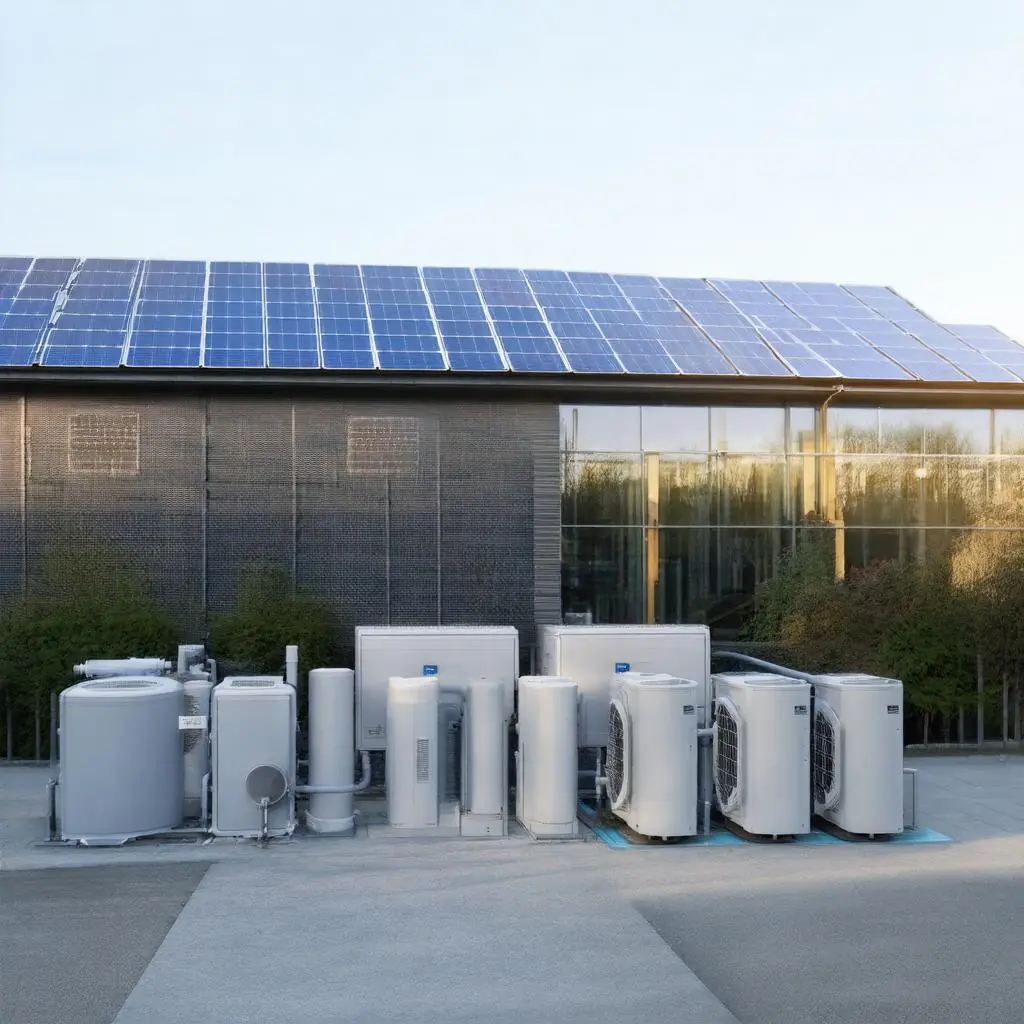
A major UK hospital is in the process of retiring its aging steam distribution and replacing it with a modern, low‑carbon heating system. The project removes inefficient steam plant and miles of steam pipework, introduces cascaded air‑ and water‑source heat pumps with approximately 2.2 MW of capacity, adds around 300 kWp of on‑site solar PV with provision for future battery storage, and deploys a comprehensive building management system (BMS) to monitor and optimise energy. Backed by public‑sector decarbonisation funding, the scheme targets roughly a 25% reduction in emissions, with lifetime savings measured in tens of thousands of tonnes of CO2. Beyond carbon and cost, the hospital expects higher reliability and better comfort across a 24/7 clinical estate—steady temperatures, fewer breakdowns, and more resilient operation.
While the scale is hospital‑grade, the principles translate directly to Essex homes and businesses. Whether you manage a school, care home, office, apartment block, or your own family home, the lessons below will help you plan a pragmatic, low‑risk path from legacy heating to efficient, low‑carbon comfort.
What the hospital did—and why it matters for Essex properties
- Replace the heat source and distribution, not just the boiler. Steam networks waste heat through distribution losses and require high temperatures and continuous maintenance. The hospital is switching to low‑temperature hot water with cascaded heat pumps sized to current demand. For many Essex buildings, the equivalent is moving from an oversized, high‑temperature boiler regime to right‑sized, low‑temperature heating that matches the building’s actual heat loss profile.
- Use a cascade of heat pumps to match load. Multiple air‑ and water‑source heat pumps deliver up to ~2.2 MW, staging on and off to meet changing demand efficiently. In commercial blocks and larger homes, a cascade approach improves resilience (one unit can continue if another is offline), increases seasonal efficiency, and simplifies maintenance.
- Generate on‑site electricity. Around 300 kWp of solar PV reduces grid consumption and helps power the heat pumps. For homes, typical arrays are 3–6 kWp; for SMEs, 30–250 kWp is common. Pairing heat pumps with PV improves running costs by aligning daytime electricity generation to heating and hot water loads, especially when smart controls or thermal storage are used.
- Control with data. A modern BMS integrates weather compensation, occupancy scheduling, and performance monitoring. For smaller sites and homes, smart thermostats, zoning, and connected TRVs achieve similar benefits—better comfort, less waste, and clear insight into how the system is performing.
- Plan for storage and load management. The hospital has allowed for future battery storage. In homes and light commercial settings, hot water cylinders, buffer tanks, and thermal stores can shift heat‑pump operation to cheaper or greener electricity windows, particularly when combined with time‑of‑use tariffs or PV generation.
- Fund strategically. Public‑sector decarbonisation schemes help unlock capital for hospitals; in Essex, there are grants, incentives, and fiscal benefits for homes and businesses that can improve payback. The crucial lesson is to align funding timelines with a phased technical plan.
A practical roadmap for Essex homes and businesses
1) Start with a whole‑building audit
- Heat‑loss assessment: Establish your building’s design heat loss and peak load at the chosen indoor and outdoor design temperatures. This ensures accurate system sizing—critical for heat pumps—and prevents under‑ or over‑sizing that harms comfort and efficiency.
- Distribution survey: Inspect pipework, radiators, underfloor loops, and controls. Note any bottlenecks, dead legs, or corrosion. Confirm the achievable flow temperatures with existing emitters.
- Fabric review: Check insulation levels (roof, walls, floors), window performance, airtightness, and ventilation. Minor fabric upgrades often allow a lower flow temperature, which unlocks higher heat‑pump efficiency.
- Electrical capacity: For heat pumps and PV, confirm available electrical capacity and any required upgrades.
2) Prioritise fabric and smart controls
- Insulation first: Topping up loft insulation, sealing draughts, and addressing cavity walls typically delivers quick wins. In non‑domestic buildings, improve door seals and roof insulation, and consider secondary glazing where feasible.
- Smart controls: Introduce zoning, programmable schedules, weather compensation, and occupancy sensors. For gas boilers, OpenTherm or similar modulating control helps today and eases a future transition to low‑temperature heating.
3) Plan a phased upgrade
- Phase 1—Controls and distribution: Balance radiators, fit TRVs, add hydraulic separation if needed, clean the system (including power flushing where appropriate), and dose with inhibitor. Optimise flow and return temperatures and set weather curves.
- Phase 2—Low‑carbon heat: Add a high‑temperature or standard air‑/ground‑/water‑source heat pump depending on building needs. In larger sites, consider a cascade for resilience and turndown. Hybrid solutions (heat pump plus existing boiler) can cover peak loads or legacy high‑temperature zones while cutting most emissions and running hours.
- Phase 3—On‑site generation and storage: Install solar PV sized to your roof and demand profile. Consider hot‑water cylinders, buffer tanks, or batteries later to maximise self‑consumption and tariff benefits.
4) Choose the right heat‑pump approach
- Standard low‑temperature heat pumps (e.g., 45–55°C flow) deliver excellent efficiency when emitters are right‑sized. Ideal where radiators can be upsized or where underfloor heating exists.
- High‑temperature heat pumps can reach higher flow temperatures (often 65–75°C), helpful in heritage or minimally upgraded buildings. Expect a modest efficiency penalty versus low‑temperature operation.
- Hybrid systems provide a practical bridge: the heat pump delivers the baseload most of the year; the boiler covers short, very cold peaks or domestic hot water pasteurisation if required.
- Water‑source options (e.g., open loop, lakes, or closed loops) are niche but powerful where a suitable source exists; they tend to offer stable performance across seasons.
5) Right‑size and balance emitters
- Calculate room‑by‑room heat loads, then select radiators or underfloor circuits to meet those loads at the intended flow temperature. Many properties achieve targets by upsizing key radiators rather than replacing every emitter.
- Commission thoroughly: balance circuits, set pump speeds, and verify delta‑T. Correct commissioning often delivers double‑digit efficiency gains.
- Use weather compensation so flow temperature automatically reduces in milder weather, lowering energy use without sacrificing comfort.
6) Integrate solar PV and manage loads
- Size PV to your daytime demand and roof constraints; for homes, 3–6 kWp is typical, while many SMEs adopt 30–250 kWp. Larger commercial roofs in Essex can support even more.
- Use smart controls to pre‑heat hot water or charge thermal stores when PV output is high. Consider diverter valves and cylinder sensors to prioritise self‑consumption.
7) Lock in performance with maintenance and monitoring
- Annual servicing: Check refrigerant circuits (where applicable), clean coils, confirm defrost logic, test safety devices, and verify control setpoints. For wet systems, maintain water quality, inhibitor levels, and strainers/magnetic filters.
- Performance monitoring: Track seasonal performance factors (SPF), electricity consumption, and indoor comfort. In commercial sites, a BMS with trend logging highlights issues early; in homes, many heat pumps provide app‑based insights.
- Keep documentation current: As‑built drawings, control strategies, warranties, and asset registers simplify future upgrades and audits.
Funding and incentives to consider
- Boiler Upgrade Scheme (BUS): Grants are available in England for eligible heat pump installations in homes and small non‑domestic properties, subject to criteria. Installers must be MCS certified.
- Public‑sector funding: Local authorities, schools, and NHS bodies can explore Public Sector Decarbonisation Scheme (PSDS) support administered via Salix Finance, subject to funding rounds and criteria.
- VAT relief: Many energy‑saving materials for domestic properties, including heat pumps and solar PV, currently benefit from a reduced or zero VAT rate for a time‑limited period under government policy. Verify current eligibility and dates before committing.
- Smart Export Guarantee (SEG): Households and businesses exporting surplus solar electricity can receive payments from licensed suppliers under applicable tariffs.
- Capital allowances: Businesses may be able to claim capital allowances on qualifying plant and machinery, improving after‑tax project returns. Seek professional tax advice.
- Local grants and loans: Periodic schemes run by councils and regional bodies in Essex can support energy efficiency and low‑carbon technologies. Check with your local authority and the South East LEP for current offers.
- Green finance: Many lenders offer preferential loans for verified energy‑saving projects. Ensure that measurement and verification plans are in place to satisfy lenders’ criteria.
Planning works to minimise disruption
- Programme intelligently: Schedule major plant changes for shoulder seasons. For occupied buildings, plan night and weekend switchover windows and sequence zones so key areas remain in service.
- Temporary plant: For larger sites, consider temporary boilers or packaged heat‑pump units to maintain heat and hot water during changeovers.
- Off‑site assembly: Prefabricated plant skids, pre‑insulated pipework, and modular cylinders reduce time on site and improve quality control.
- Commission by zone: Bring areas online progressively, verifying controls and balancing as you go to avoid call‑backs.
- Communicate with occupants: Provide clear timelines, expected noise or access needs, and contact points. For homes, agree a daily working window and protection measures for finishes. For businesses, coordinate with facilities teams and critical operations.
- Handover and training: Ensure end users receive control guides and basic training, with clear aftercare contacts.
Selecting properly accredited engineers
- Look for relevant accreditations: Gas Safe (gas appliances and safety), MCS (heat pumps and solar PV), RECC or equivalent consumer codes (domestic renewables), and NICEIC/NAPIT (electrical). For commercial sites, consider CHAS/Constructionline/SSIP health and safety accreditations.
- Demand manufacturer training: Installers trained by leading brands—such as Worcester‑Bosch, Vaillant, Ideal, and Baxi—bring valuable product knowledge and access to extended warranties.
- Ask for evidence: Heat‑loss calculations, emitter schedules, control strategies, and commissioning checklists should be standard. References from similar projects in Essex are invaluable.
- Aftercare commitment: Ensure the provider offers planned preventative maintenance, rapid response for faults, and performance reviews. Long‑term support protects your investment and keeps savings on track.
How Brentwood Heating can help in Brentwood and across Essex
- Whole‑system thinking: We begin with a thorough survey—fabric, heat loss, emitters, and controls—so solutions are tailored to your building and budget.
- Phased, low‑disruption delivery: From control upgrades and power flushing to full system replacements, we plan works to keep you warm and operational.
- Technology‑agnostic advice: Whether you need a high‑efficiency boiler with weather compensation today, a hybrid heat‑pump approach, or a full heat‑pump and PV solution, we evaluate options for comfort, reliability, and lifetime cost.
- Accredited expertise: All gas work is undertaken by Gas Safe registered engineers. For low‑carbon technologies such as heat pumps and solar PV, we ensure design and installation are carried out by appropriately accredited specialists, with clear warranties and aftercare.
- Transparent quotations and responsive support: We provide clear, tailored quotes and 24/7 emergency response across Brentwood, Upminster, Hornchurch, Southend, and the wider Essex area.
The hospital’s transition—from steam to smart, low‑temperature heat powered by efficient heat pumps and onsite generation—shows what is possible: lower emissions, lower running costs, and higher reliability. With a structured roadmap, practical funding, and accredited local expertise, Essex homes and businesses can capture the same benefits at their own scale. If you are ready to begin, start with a heat‑loss and system audit, optimise fabric and controls, and plan a phased upgrade. We will help you chart the best route for your property and keep the project on time, on budget, and delivering for years to come.