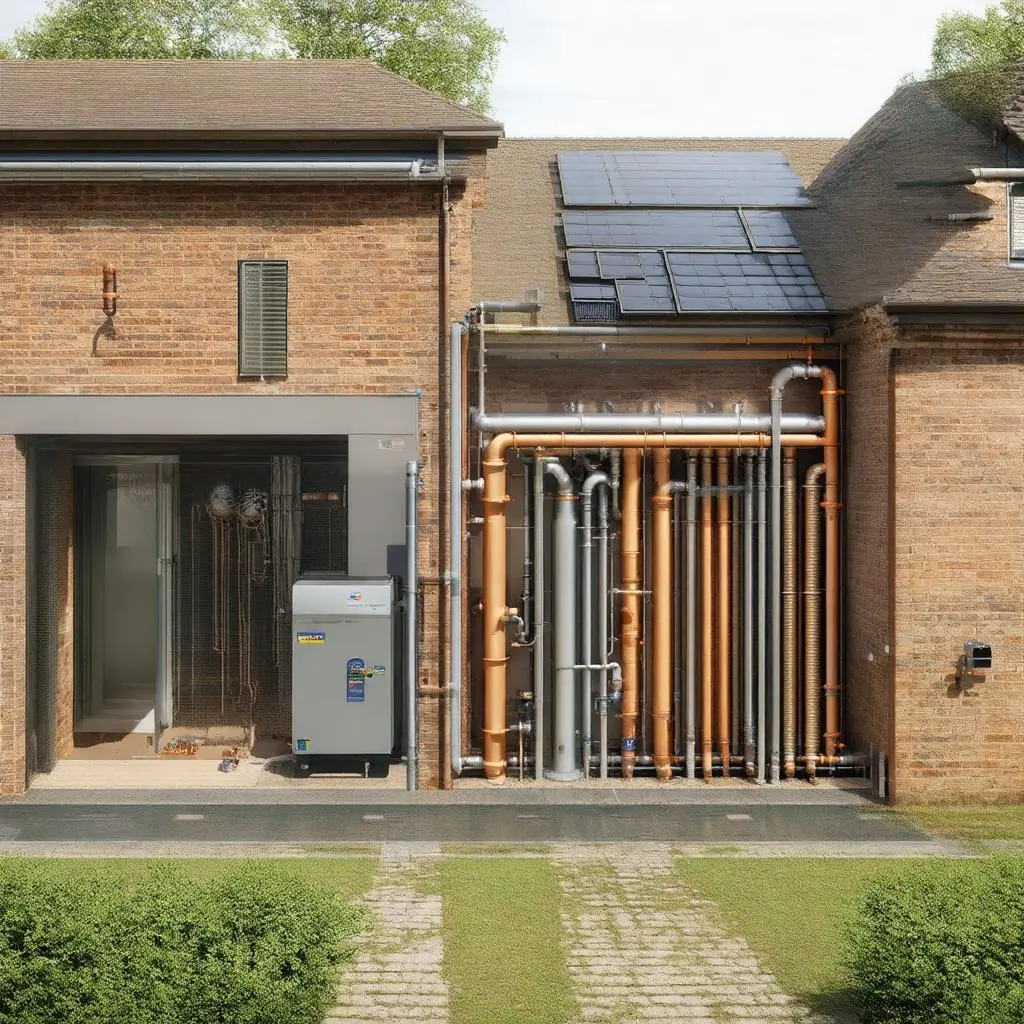
Across the built environment, renewable heat is redefining how we plan, power, and manage buildings. A compelling example comes from a large university campus that recently installed an underground heat exchange network. Beneath courtyards and green spaces, a field of vertical boreholes connects to high-efficiency heat pumps. In summer, the system extracts excess heat from buildings and stores it in the ground; in winter, it draws low-grade heat back from the soil and upgrades it to comfortable indoor temperatures. The result is a steady, low-carbon heat source and sink that dramatically reduces annual energy spend and dependence on gas.
At the heart of such systems are geothermal heat exchangers—closed-loop pipes buried horizontally at shallow depth or vertically in boreholes, filled with a heat transfer fluid. When paired with ground-source heat pumps (GSHPs), they move heat rather than generate it. Because heat pumps deliver more heat energy than the electrical energy they consume—typically a coefficient of performance (COP) of 3 to 5 under well-designed conditions—operational costs and carbon emissions can be substantially lower than traditional boilers and chillers, especially as the electricity grid decarbonises.
Key technical principles include:
- Stable ground temperatures: A few metres below the surface, temperatures stay relatively constant year-round, providing reliable heating in winter and heat rejection in summer.
- Seasonal energy balancing: In campus-scale systems, “borehole thermal energy storage” lets excess summer heat be banked underground for winter use, smoothing peaks and improving system efficiency.
- Low-temperature heat distribution: Systems perform best with underfloor heating or larger radiators designed for lower flow temperatures, reducing losses and increasing heat pump efficiency.
- Modular scalability: Arrays can be scaled from single homes to large estates and districts, allowing phased deployment as budgets and site constraints allow.
For the campus, the benefits are tangible. Heating and cooling costs have fallen thanks to high COPs and reduced reliance on purchased gas, while maintenance has simplified—borehole arrays have few moving parts and long service lives. Critically, emissions are lower. Even with today’s grid mix, many well-optimised GSHP installations achieve significant carbon savings versus gas boilers; as the UK grid continues to incorporate more renewables, the carbon intensity of each kilowatt-hour of heat delivered by heat pumps will fall further.
However, geothermal is not a universal solution. Viability depends on:
- Ground conditions and available space, which influence drilling feasibility, loop configuration, and cost.
- Building heat demand and distribution systems; low-temperature-ready emitters maximise returns.
- Planning, permitting, and coordination, especially on constrained urban plots.
- Upfront capital cost and the business case over the life cycle, including maintenance and expected grid decarbonisation.
For many properties, particularly where outdoor space is limited, air-source heat pumps (ASHPs) offer a practical alternative with similar benefits. For others—especially campuses, business parks, and new developments with car parks or open land—geothermal networks can be transformative, providing quiet, reliable, and future-ready heating and cooling at scale.
From campus-scale innovation to Essex properties: integration pathways and practical steps
What does this mean for homeowners and building managers in Brentwood, Upminster, Hornchurch, Southend, and across Essex? The lesson is not that every building needs a borehole field; it is that renewable heat and smarter thermal systems can deliver real savings and resilience when they are planned holistically. Whether you manage a busy household or a multi-tenant commercial site, there are clear opportunities—and a few challenges—to consider.
Opportunities for new builds
- Design for low temperatures from day one: Underfloor heating or suitably sized radiators, good zoning, and weather-compensated controls make heat pumps more efficient and comfortable.
- Allocate space early: Plant rooms, hot-water cylinders, buffer tanks, and (where feasible) external areas for ASHP units or borehole arrays should be factored into the site plan.
- Integrate with fabric performance: High insulation standards, airtightness, and quality ventilation (with heat recovery if appropriate) reduce peak loads and capital costs for plant.
- Enable future flexibility: Even if starting with a high-efficiency gas boiler, specifying emitters and pipework that operate well at lower temperatures makes a later transition to a heat pump simpler and cheaper.
Challenges to manage
- Upfront cost and payback: Renewable systems can be capital-intensive. A whole-life assessment that includes running costs, maintenance, and potential grants or incentives often clarifies the investment case.
- Space and aesthetics: Urban plots may constrain borehole drilling, external units, and cylinder storage. Sensitive placement and acoustic treatment address noise and appearance concerns for ASHPs.
- Legacy systems: Older properties with small radiators and limited insulation may need upgrades to get the best from low-carbon heat.
Pathways for retrofits and mixed estates
- Hybrid strategies: Where a full switch is not yet practical, a hybrid setup—combining an efficient condensing boiler with a heat pump for the bulk of the heating season—can cut gas use and emissions while managing peak loads.
- Phased works: Start with fabric improvements and controls, then upgrade emitters and hydraulics, and finally transition plant. This reduces disruption and spreads cost.
- Thermal networks for commercial sites: Business parks and campuses with car parks or courtyards can consider shared ground arrays, allowing multiple buildings to connect over time.
Practical steps you can take now
- Commission an energy and heating assessment: A structured survey will quantify heat demand, distribution temperatures, emitter suitability, and the state of existing plant and controls.
- Improve the building fabric first: Insulation, airtightness, and glazing upgrades reduce demand, shrink plant size, and enhance comfort.
- Optimise your current system:
- Power flush and treat your central heating to improve circulation and efficiency.
- Balance radiators and fit thermostatic valves for room-by-room control.
- Add magnetic filtration and corrosion inhibitors to protect equipment.
- Install smart, weather-compensated controls to reduce running costs.
- Upgrade inefficient boilers: If a heat pump is not yet viable, replacing an aging boiler with a modern A-rated condensing model from a trusted brand can deliver immediate savings and lower emissions—especially when operated at lower flow temperatures.
- Prepare for low-temperature operation: Consider larger radiators or underfloor heating in key zones and ensure there is space for a hot-water cylinder if you plan to adopt a heat pump later.
- Consider renewable options:
- Air-source heat pumps for properties with limited land.
- Ground-source heat pumps where boreholes or trenching are feasible.
- Solar PV to offset electricity consumption, including that of heat pumps.
- Solar thermal for domestic hot water in suitable homes.
- Plan for compliance and safety: Use qualified, accredited engineers. For gas work, Gas Safe registration is essential. Ensure electrical and refrigerant handling standards are met for heat pump installations.
- Schedule regular servicing: Annual servicing maintains efficiency, protects warranties, and identifies issues before they become costly failures.
- Build resilience: Where operations are critical, consider backup heat sources, thermal storage, and robust controls with remote monitoring.
How a trusted local partner can help
- Tailored advice: Every building is different. A site survey and heat-loss assessment will identify the most effective measures and whether a heat pump, boiler upgrade, or hybrid pathway suits your goals and budget.
- End-to-end coordination: From central heating upgrades and boiler replacements to smart controls, hydraulic improvements, and bathroom or hot-water system design, coordinated works minimise disruption and maximise results.
- Quality and compliance: Gas Safe-registered engineers, clear documentation, and transparent communication provide confidence at each stage.
- Responsive support: When issues arise, rapid call-out capability limits downtime—a critical consideration for busy households and commercial sites.
Brentwood Heating Ltd serves homeowners and commercial property managers across Brentwood and the wider Essex area—including Upminster, Hornchurch, and Southend—with a focus on reliable, hassle-free service. We maintain and install leading boiler brands, deliver central heating installations and repairs, carry out power flushing and gas safety certification, and integrate advanced controls to drive efficiency. For clients exploring ground-source or air-source heat pumps, we can help assess suitability, prepare existing systems for low-temperature operation, and coordinate with specialist partners where required.
Renewable heat is not a distant ideal; it is a practical pathway already delivering results at campus scale and in individual homes and businesses. By combining fabric improvements, smarter controls, and the right heating technology for your property, you can cut running costs, reduce emissions, and increase comfort. If you would like a tailored assessment and quote for your home or building in Essex, our team is ready to help.