For busy homeowners and property managers across Brentwood, Upminster, Hornchurch and Southend, the most efficient way to cut energy costs and avoid mid-winter breakdowns is to complete a targeted set of checks now. The following time-saving checklist is designed to help you prioritise what you can do yourself safely and when to involve Brentwood Heating’s 24/7, Gas Safe registered team. It applies to all major boiler brands, including Worcester-Bosch, Vaillant, Ideal and Baxi.
-
Book a Gas Safe boiler service (early autumn is best)
- Why: Preventative servicing is the single best defence against breakdowns and fuel waste. It maintains warranties and keeps combustion safe.
- When: Annually, preferably before sustained cold weather. Landlords should align this with CP12 obligations (see below).
- What your engineer will do: Combustion analysis and flue safety checks; inspection of seals, electrodes and heat exchanger; cleaning condensate traps; verification of gas pressures, ventilation and safety devices; checking system pressure/expansion vessel; and updating your Benchmark/service record.
- Tip: Provide access to the boiler, airing cupboard and thermostats. Have last year’s paperwork to hand. Brentwood Heating engineers are experienced with Worcester-Bosch, Vaillant, Ideal and Baxi nuances, helping to spot brand-specific issues early.
-
Check system pressure (sealed systems and combis)
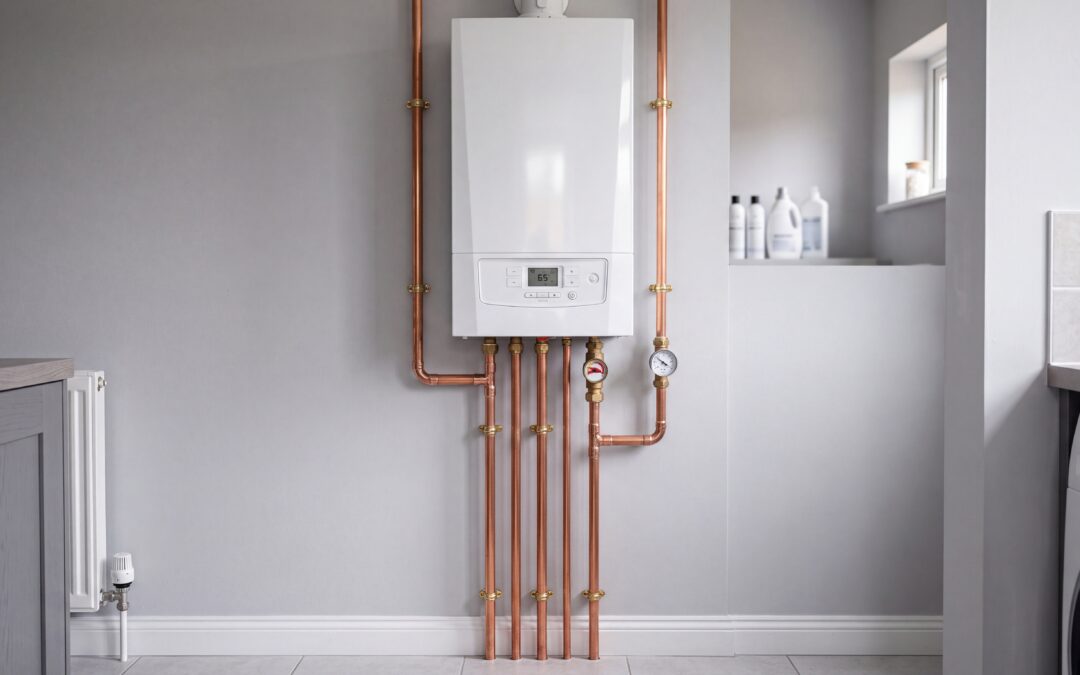
- Safe DIY: With the heating off and the system cool, glance at the pressure gauge on the boiler. Most sealed systems should read around 1.0–1.5 bar when cold (check your manual).
- Top-up guidance: If low, you may top up gently using the filling loop to the recommended cold pressure; close valves carefully. Do not exceed the red zone (usually 2–3 bar). If pressure drops repeatedly, call us—this can indicate a leak or expansion vessel fault.
-
Bleed radiators to remove trapped air (simple DIY)
- Signs: Gurgling sounds, cold tops with warm bottoms, or uneven heating.
- How:
1) Turn heating off and allow radiators to cool.
2) Using a radiator key and a cloth, open the bleed valve at the top slightly until air hisses.
3) When a steady trickle of water appears, close the valve firmly (not over-tight).
4) Recheck boiler pressure and top up if needed. - Order: Start with the highest radiators and work down.
- If any valve sticks or leaks, stop and call our team.
-
Balance radiators for even heat (DIY with care, or ask us)
- Why: Balancing ensures each radiator receives the correct flow, improving comfort and efficiency.
- Basic approach: Open all thermostatic radiator valves (TRVs), then use the lockshield valves (usually with a cap) to slightly throttle over-performing radiators so cooler rooms heat up at a similar rate. Aim for an even warm-up across the property.
- When to call us: If rooms still lag, if you have microbore pipework, or if you want a precision balance using temperature probes and flow measurements for optimal condensing efficiency.
-
Look for signs you need a power flush or chemical clean
- Indicators:
- Radiators cold at the bottom or centre even after bleeding.
- Dirty, sludgy or black water when bleeding radiators.
- Noisy boiler or pump (kettling), frequent pump seizures, or sticking TRVs.
- Slow warm-up, some radiators never getting hot, or repeated component failures.
- Pin-hole leaks or recurring air in the system.
- Actions: A professional power flush or targeted chemical clean removes magnetite sludge and debris. Pairing this with a magnetic filter (e.g., MagnaClean) and inhibitor greatly reduces future sludge build-up. Brentwood Heating will advise the right approach for Worcester-Bosch, Vaillant, Ideal and Baxi systems, including warranty-safe chemicals and procedures.
-
Optimise your controls and heating strategy
- Thermostat and schedules:
- Set consistent, realistic target temperatures (for many households, 18–20°C living spaces; bedrooms lower).
- Use timed schedules that match occupancy, avoiding frequent on/off spikes.
- Smart controls:
- Consider smart thermostats and TRVs with geofencing, load or weather compensation (many boilers support these, including models from Worcester-Bosch, Vaillant, Ideal and Baxi).
- Benefits: Fewer temperature overshoots, better condensing boiler operation, and easier zoning for larger homes or HMOs.
- Property managers: Central dashboards make multi-property oversight simpler and reduce callouts.
- Flow temperature:
- For condensing boilers with radiators, a lower flow temperature (often 50–60°C) can improve efficiency. Reduce gradually while checking comfort; older or poorly insulated homes may require higher settings.
- For hot water cylinders, keep store temperature at 60°C minimum to manage legionella risk, and use a thermostatic mixing valve to prevent scalding at taps.
- TRVs:
- Ensure TRV heads move freely and are not blocked by curtains or furniture. Set lower in rarely used rooms to save energy.
-
Prevent frozen or blocked condensate pipes
- Check: External condensate pipes should be insulated (ideally 32mm diameter pipe, well lagged). Consider trace heating for exposed runs.
- Symptoms of freeze: Boiler locking out with a condensate-related error during cold snaps.
- Action: If frozen, do not dismantle the boiler. Thaw the external pipe gently with warm (not boiling) water and call us if the fault persists. We can reroute or upgrade the pipework to reduce future risk.
-
Inspect ventilation, flues and air intakes (visual only)
- Safe DIY: Ensure flue terminals are unobstructed (no foliage or debris) and boiler cupboards have adequate ventilation if required by the manufacturer.
- Do not: Remove case panels or attempt internal flue examinations—this is strictly for Gas Safe engineers.
-
Test carbon monoxide (CO) alarms and install where required
- Testing: Press the test button monthly; replace batteries as directed and the whole unit at end-of-life (typically 7–10 years).
- Placement: Follow the manufacturer’s instructions. As a general guide, fit 1–3 metres from the appliance, at breathing height, away from dead air spaces, extractor fans and windows.
- Legal duties for landlords in England: CO alarms must be installed in any room used as living accommodation containing a fixed combustion appliance (excluding gas cookers). Faulty alarms reported by tenants must be repaired or replaced promptly.
-
Pipework and cylinder basics
- Lag hot water pipes in unheated spaces and check loft insulation around tanks (without obstructing ventilation).
- For vented cylinders, verify that loft tanks are clean and lids intact. Any staining or weeping from cylinders or safety valves warrants an engineer visit.
-
Safety first—know your emergency steps
- Gas smell or suspected leak: Do not use switches or flames. Open doors and windows, evacuate, and call the National Gas Emergency Service on 0800 111 999. Then contact Brentwood Heating for repairs.
- CO alarm sounds or symptoms (headache, dizziness, nausea): Ventilate, evacuate, seek medical advice and call emergency services. Do not reuse the appliance until checked by a Gas Safe engineer.
-
Keep records tidy
- Retain service reports, Benchmark documentation, filter cleaning logs and inhibitor top-ups. For landlords, store Gas Safety Records for at least two years and share with tenants as required.
-
Plan for replacement if your boiler is near end-of-life
- Considerations: Age (10–15+ years), availability of parts, frequent faults, rising gas use or noise.
- Benefit: A modern condensing boiler with smart controls can markedly reduce running costs. Brentwood Heating supplies and installs Worcester-Bosch, Vaillant, Ideal and Baxi, with attractive guarantees (up to 10 years on selected models).
What you can do safely yourself—and when to call Brentwood Heating’s 24/7 team
-
Suitable for DIY
- Thermostat scheduling and smart control setup (following manufacturer guidance).
- Radiator bleeding and gentle system pressure top-ups.
- Visual checks: flue termination clear, cupboard ventilation not blocked, visible leaks.
- TRV adjustments, pipe lagging and basic condensate pipe insulation checks.
- CO alarm testing and battery changes.
-
Leave to a Gas Safe engineer
- Boiler servicing, internal cleaning, and all gas/combustion adjustments.
- Flue integrity checks, gas pressure/ratio tests and combustion analysis.
- Power flushing/chemical cleans, system balancing where complex or persistent issues remain.
- Expansion vessel recharging or replacement, PRV and safety device work.
- Electrical wiring alterations to controls and zoning.
- Persistent pressure loss, repeated lockouts, or any smell of gas/soot staining.
-
Key dates and duties for landlords and property managers
- CP12 (Annual Gas Safety Record):
- Must be renewed every 12 months by a Gas Safe registered engineer.
- Provide a copy to existing tenants within 28 days of the check; provide to new tenants before they move in.
- Keep records for at least two years.
- Smart scheduling: Since 2018, you may carry out checks up to two months before the current certificate expires while retaining the original renewal date (MOT-style). Book early to avoid access issues.
- CO alarms: Install in rooms with fixed combustion appliances (excluding gas cookers) and replace/repair promptly if reported faulty.
- Access coordination: Share meter/plant room locations, arrange keys or key safes, and communicate with tenants to reduce missed appointments.
-
Time-saving booking tips
- Combine tasks: Align boiler service, CP12, and a system health check (bleed/balance review, inhibitor test) in one visit.
- Provide brand/model details: Worcester-Bosch, Vaillant, Ideal and Baxi model numbers help us arrive with the right spares.
- Note issues in advance: List any cold rooms, noises, error codes, or pressure trends to speed diagnosis.
- Choose off-peak slots: Early autumn weekdays often have faster availability than first cold snaps.
-
Practical energy-saving adjustments before winter
- Gradually reduce flow temperature on condensing boilers while monitoring comfort.
- Lower room setpoints slightly where acceptable and use TRVs to avoid heating unused spaces.
- Check door/window seals and close trickle vents only during heating cycles if needed for comfort (maintain adequate ventilation where combustion appliances are present).
- Use hot water schedules that reflect actual demand; avoid excessively high cylinder thermostats (store at 60°C for safety, use mixing valves at outlets).
-
Common red flags—call us promptly
- Boiler repeatedly locking out or displaying fault codes.
- Loud banging/whistling (kettling), especially after recent top-ups.
- Brown/black water when bleeding radiators or persistent cold patches.
- Pressure climbing towards the red zone or falling to zero between days.
- Any sign of soot, scorching, or melted casework.
- Condensate pipe gurgling or external drips/freezing symptoms during cold snaps.
By completing this checklist now, you will improve efficiency, extend system life and reduce the risk of inconvenient failures when temperatures fall. Whether you manage a portfolio across Brentwood, Upminster, Hornchurch and Southend, or are preparing your family home, Brentwood Heating Ltd provides rapid, 24/7 support—from routine servicing and power flushing to emergency call-outs and compliant landlord certification. If you are unsure about any step, or would like a tailored quote that fits your boiler type and budget, our Gas Safe registered team is ready to assist.